Outstanding new sewer grit acceptance and treatment station with HUBER know-how in Koblenz

The second largest municipal sewage treatment plant of the German federal state Rhineland-Palatinate has got a new comprehensive grit treatment station:
Sewage treatment works Koblenz with a design size of 320.000 PE rely on HUBER equipment.

The municipal wastewater treatment team before unloading to the grit acceptance station in the operational building
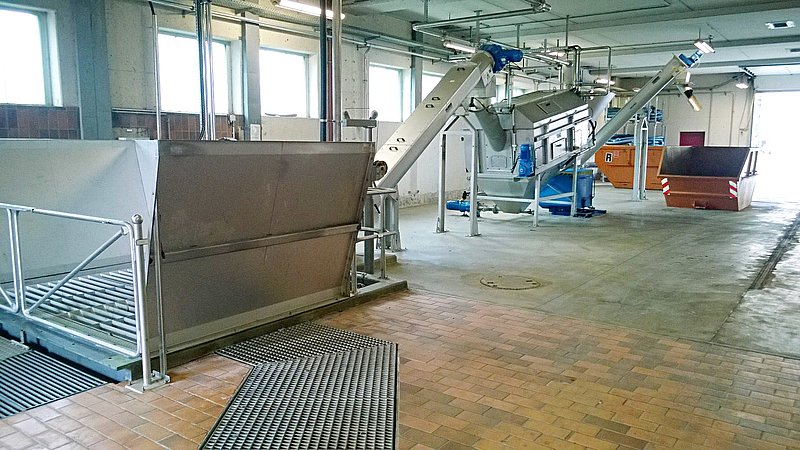
From left to right: Grit acceptance station with supply tank and grit dosing screw HUBER RoSF 8VR, HUBER Wash Drum RoSF9, HUBER Coanda Grit Washer RoSF4 including residue material container

With its 110,000 inhabitants the district-independent town Koblenz is one of the five regional centres and the third largest town in Rhineland-Palatinate. Koblenz is situated at the headland where the river Moselle joins the Rhine, the so-called "German Corner". The nearest bigger cities are Bonn (about 60 km down the Rhine) and Mainz (about 90 km up the Rhine).

Koblenz is surrounded by mountain ranges: the foothills of the Hunsrück mountains in the south, the slightly hilly landscape of the Eifel in the west, and the partly steep Westerwald hills which extend close to the river. The the eastern districts of Koblenz lie on these hills.

The era of municipal water treatment in Koblenz started in 1892 when a sewer network was built. But the wastewater still flowed untreated into the rivers until the first mechanical cleaning devices were installed. From 1971 on, the city's wastewater was treated mechanically and biologically in the sewage treatment works Koblenz-Wallersheim. In 1990, chemical treatment was added. Since 1997 when also the wastewater of the Vallendar municipality started to be directed to the STW Koblenz the plant has handled up to 15 million cubic metre wastewater a year, i.e. about 40,000 m³ a day. The treated wastewater is discharged to the Rhine. They thus fulfilled one of the major tasks a municipal sewage treatment works has to fulfil to protect our environment.

To fulfil their tasks even better the responsible representatives of the sewer and sewage treatment works decided to integrate into their operational building a technical solution for the acceptance and treatment of grit from the municipal sewer system.

When deputy plant manager Ulrich Marquart was looking for the suitable product it took not long until HUBER SE came into this mind, no wonder as there have been close contacts for a long time already.

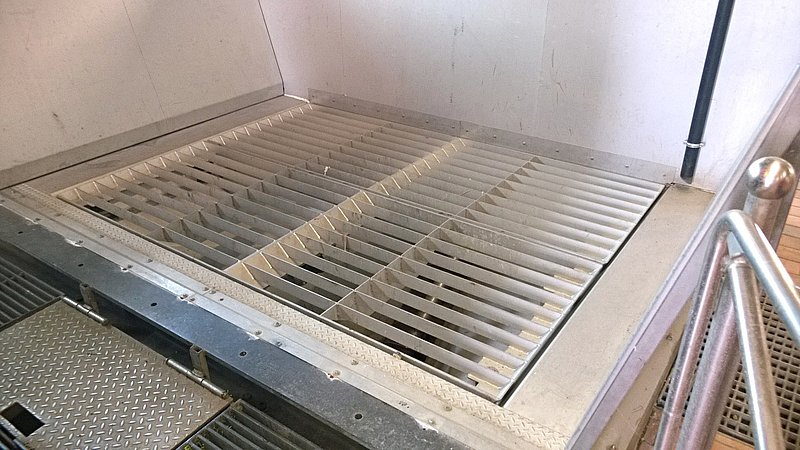
Grit acceptance tank / supply tank with bar grate
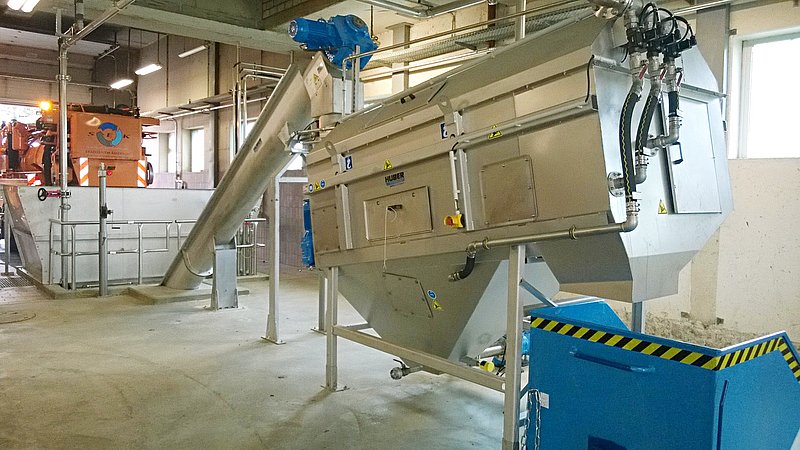
Grit acceptance tank, grit dosing screw and wash drum

The engineering office KOCKS CONSULT GmbH in Koblenz was commissioned to take over planning, tender specification and supervision of construction. The engineering office's representatives Mr. Börder and Mr. Schwickardi were in charge of the project while Ulrich Marquart was responsible on the part of the sewage treatment works. In the course of the project wastewater he was supported by wastewater manager Michael Müller.

The customer defined his requirements for a new treatment plant as follows:

  • robust, reliable technical equipment
  • capacity about 500 t/a
  • removal of coarse material, sand and silt from the sewer grit
  • separation of organic material from the sewer grit
  • wash water discharge directly into the inlet to the sewage treatment works

The project was put to public tender which was won by Zahnen Technik Gmbh in Arzfeld, represented by Mr. Zahnen and Mr. Heinisch. Zahnen Technik GmbH had submitted the most economical offer for the delivery and installation of the mechanical treatment equipment. They offered HUBER machines.

Brief description of the grit treatment concept

The input material is fed to a grit acceptance tank in which a bar grate is installed.
The predewatered sewer grit and road sweepings are unloaded into the underground grit acceptance tank from a flushing and suction vehicle.

An 80 mm bar grate not only retains coarse debris and "products", it also protects persons and staff on site.
A grit dosing screw (RosF 8VR) delivers the raw material from the acceptance tank into a wash drum (HUBER Wash Drum RoSF9) where the coarse material > 10 mm is separated while all particles < 10 mm are flushed into a pump sump that is installed under the wash drum.

A wear-resistant vortex impeller pump delivers the grit-organics-water mix from the wash drum into the grit washing plant (HUBER Coanda Grit Washer RoSF4) which separates and washes the grit.

The effluent from the grit washing plant – the water-organics mix – flows back into the inlet to the sewage treatment plant. Washed grit and coarse material are retained as fractions.

 
We would like to use this opportunity to once again say 'thank you' to all parties involved in this project and look forward to hopefully long years of successful cooperation.
  

Related Case Studiesclose

Related Case Studies

https://www.huber-test.de//huber-report/ablage-berichte/grit-separation-and-treatment/outstanding-new-sewer-grit-acceptance-and-treatment-station-with-huber-know-how-in-koblenz.html